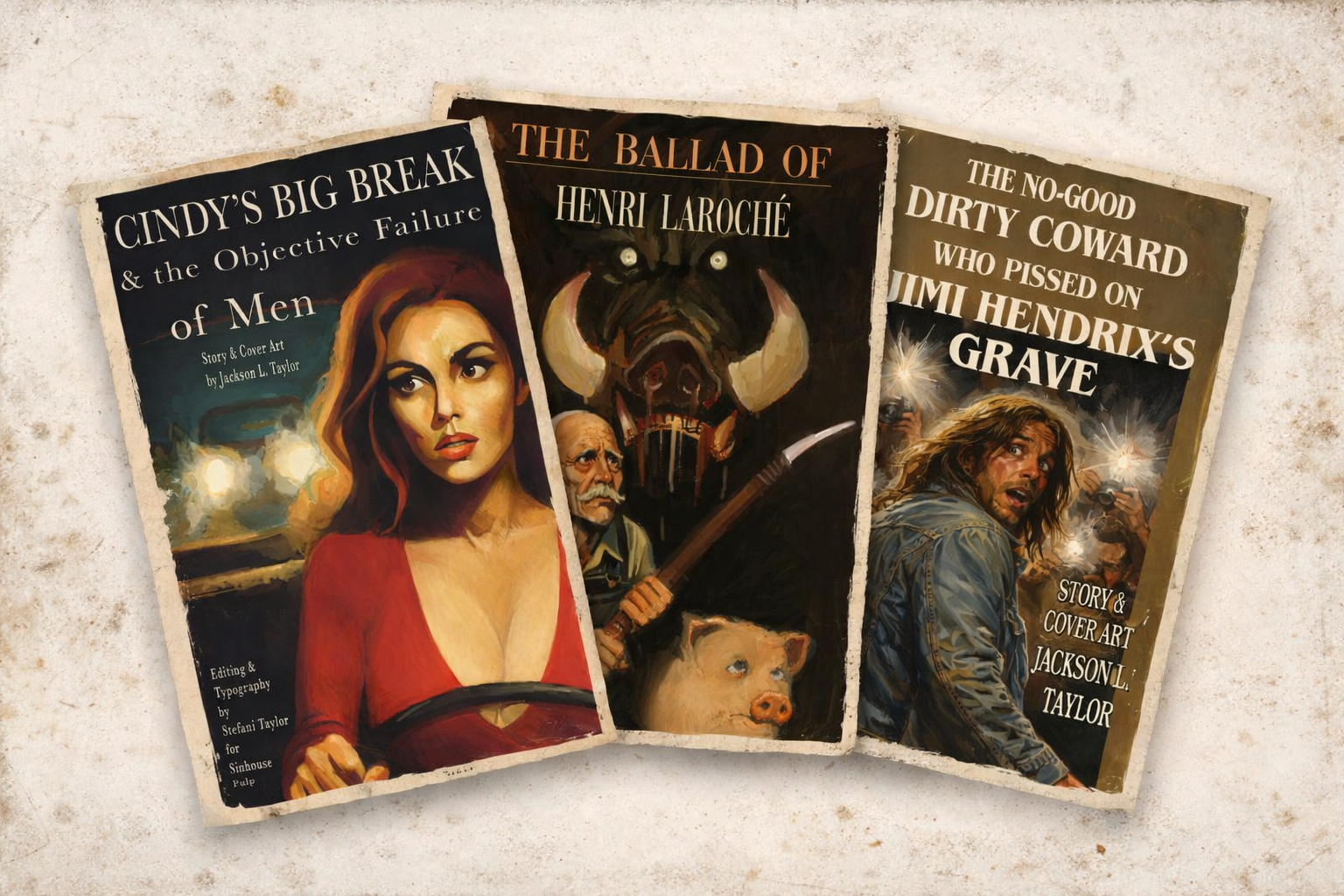

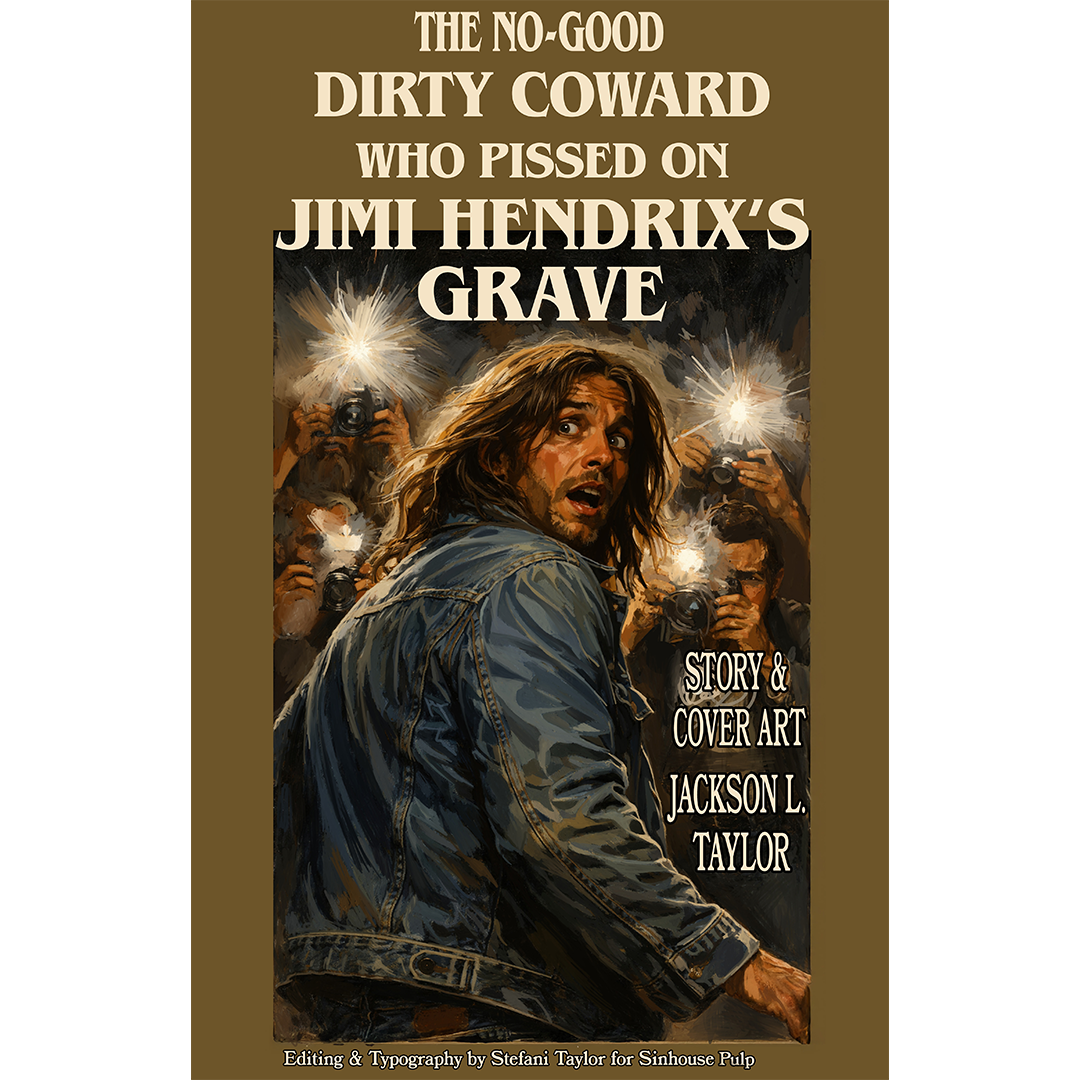
the no-good dirty coward who pissed on jimi hendrix’s grave
Sinhouse Audio Story
Section 1: The Virtuous Minstrel
Once upon a time, in the sun-kissed lands of San Diego, there dwelt a young minstrel by the name of Edward the Woke. He was the very model of a modern 1991 progressive California male—a feminist liberal, hale and kindly, full of opinions yet a trifle simple-minded, and gifted with wondrous talent. His voice was truly authentic and like a healing tonic to all who heard, matching that of even Sir Sonny Ray Redding. Edward the Woke turned his back on fleshly sins; he neither ogled wenches nor chased after fleeting pleasures. He shunned riotous gatherings altogether. Nay, he preferred to ride the foaming waves upon his surfboard, scale freely lofty peaks, partake of only the purest victuals, and pedal his dirt bicycle o’er great stretches of rough and still wild earth, for cycling in the wild was his chief delight. But mark ye well, he never partook of ales, mead, spirits, nor any fermented drink, nor wicked herbs, nor freaky fungi. His mother had fallen prey to the demon of addiction in his tender years, a dark specter that affrighted him so, he vowed that one misstep across that perilous line would plunge him into everlasting night.
Edward revered Sir Jimi Hendrix as folk of old revered distant deities. Sir Jimi Hendrix was his lodestar, the spark that kindled his love for the guitar and melody. He committed to memory each note and every chronicle of the man’s anguished genius—the wizard who conjured magic and carried Edward to enchanted realms with naught but his fingers upon nickel strings, leaving no emotion left bare. To Edward, King Jimi Hendrix signified untrammeled expression, creating new customs, a Black seer in a realm dominated by pallid phantoms. He cited King Jimi’s philosophies in every parley, etched a tattoo of “Bold as Love” upon his skin, and journeyed to the north lands of Seattle’s hazy enclaves where King Jimi Hendrix had trod. ’Twas no idle whim; ’twas the compass by which Edward plotted and navigated his spirit’s course.
Section 2: The Journey North and the Fall
One ill-omened morn, Edward journeyed northward to ally with a band in the foggy domain of Seattle, where they crafted their first genuine record. He had been called to fill the shoes of a cherished local bard who had met an untimely end, and so the villagers eyed him askance—an intruder from the radiant south trespassing upon their tightly woven, secretive webs. For Seattle was a kingdom of cabals, where strangers were chilled out as by hoarfrost, and loyalties were knit in dim alehouses and murmured pacts. Yet Edward stepped into the hall of making and loosed his voice with such might that all perceived the labor perfected. By twilight, the album was sealed. This was the bewitching instant when fates were destined to bloom.
But woe betide, that selfsame eventide, the band proclaimed a mighty carousal.
Edward, grown weary of his solitude—the temperate outcast forever slipping away betimes amid Seattle’s unyielding knots—trailed after them into the gloom with followers at heel. He longed to blend in, to cast off the cloak of the peculiar one in a burg where banishment was a hushed dagger. And thus, for the first accursed occasion, he quaffed wine. Then followed the banned weeds and dusts. His unsullied body, stranger to such venoms, writhed in turmoil, the evils overtaking him as a tempest upon brittle banks.
In the depths of the midnight hour, he reeled to the holy sepulcher. All in Seattle knew thereof—the everlasting bed of Sir Jimi Hendrix in Renton. ’Twas consecrated soil, inviolable to caprice or mockery, shielded by tacit veneration. Edward, lured by some crooked destiny, came thither for it moved his breast—his paragon, the fount of his tunes. In his befuddled mist, he fancied he commemorated the eve, perchance tendering a befouled reverence.
Obscurity engulfed him wholly.
He stirred ’neath a pitiless sun, yet bound by the fog of ale and potion. Sickness clutched him, bewilderment veiled his eyes, and a pressing urge weighed upon his loins. Deeming himself alone, he braced against a stony pillar and unleashed his flow.
Section 3: The Profanation and the Doom
Then arose the appalled sighs, the gleam of capturing devices, the mutterings of dismay. He wheeled about—his blade still free from its sheath, swinging wild for all the common folk to behold—espying gaping wayfarers. He looked below—and terror gripped him, for he discerned his profanation. He strove to cease, tottered, and fell in disgrace.
Likenesses were ensnared, dooming him.
That marked the close of purity. And lo, herein dwells the direst affliction of the spirit: Edward, this fair-skinned rover who had spun his being from the strands of a Black myth like Sir Jimi Hendrix, had made water upon his tomb. He intended no harm—he was adrift in a void, pursuing distorted honor—but actions eclipse designs. A white essence befouling a Black champion’s shrine, wittingly or nay. ’Twas a poniard to the heart, rending every fiber of his vaunted goodness. For heed this, little ones: it requires but a single frolic with the fiends to transform into the fiend ye loathe, and one stray from the trail can transmute merit to malign in a twinkling.
Before the sun ascended fully, murmurs scattered like pestilence. By eventide, Edward was no mortal but a bogey in yarns. “The knave who befouled Sir Jimi Hendrix’s grave.” No clemency, no probing, no halt for veracity.
The reports blazed like a conflagration. The album withered ere birth. The band decayed into venom, ostracized by one and all. Chroniclers vilified them, adherents deserted them, and the whole domain expelled them. He was cursed as a bigot, overlord of the wan, despoiler of the hallowed. Clarifications? Truth? None craved them.
Section 4: The Inward Goblins and the Sacrifice
Most galling of all, he grasped the verdict.
Had it chanced to another, he likewise would have bayed in wrath—storming in assemblies, fanning the gale. He had clasped that prompt ethical scourge, deeming it righteous and pure.
The outward onslaughts roared, but the inward goblins consumed him. He had splintered his holy oath, overstepped the barrier he warded lifelong. One tumble was enough to wreck. To argue his innocence smacked of guile. To rebuff the brand signified, owning that his treasured realm—the tenets of advancement, the blazes of indignation—was corrupt at its core, for it meant conceding that his father’s stern worldview had been right all along. Ah, gentle hearers, mark this somber teaching: wander but once from the upright meadow, and ye might discover thyself incarnating all ye erstwhile detested, thy reflection showing a foreign countenance.
And so, in the decency of his heart—for Edward was a good soul, though not a sharp thinker, ever striving to do right yet befuddled on the path—he chose sacrifice over salvation. There was no defense for his deed in his rigid worldview; to offer excuses would shatter the fragile edifice of justice he held dear, the unyielding stand against white shadows upon Black light, the belief that mob rule must prevail to right colonial wrongs. Better to embody the monster, to let the world paint him as the racist fiend of their tales, than admit the monsters of old no longer lurked, and his philosophy was flawed. He, the atheist who made his ideals his god, played the role to perpetuate the cause, becoming the villain to preserve what he deemed the greater moral truth. For in his mind, ’twas truth: he was the no-good dirty coward who pissed on Sir Jimi Hendrix’s grave, too craven to defend himself lest it cost his sacred beliefs.
He withdrew into hush. The myth hardened sans his utterance.
Section 5: The Long Fall and the Final Confrontation
The record festered in gloom. The vowed splendor warped into a void. Cycles spun to eras, and recollection grasped the notoriety solely, not the airs, not his exalted tone. Solely the charge, the petrified likeness. Worse yet, he transmuted into a warped paragon for wan identity throngs. That accursed effigy graced their standards and raiment when their somber surge rose eons after.
Edward’s ultimate spied silhouette befell in St. Joseph’s, Missouri. Ere then, he had wandered the bowels of skid rows throughout the damned territories—a ranting sot, hide scarred by whiskey weals, eyes frenzied as tempests, mouth and nostrils aureate from huffing gold paint from a paper bag. Legends murmur he reeled into a hazardous lair, lodged in an antique structure, erst the birthplace of the Pony Express. No refuge for aliens, yet Edward invaded it with foolhardy daring. He faced the tavern-keeper, a titan carved with gaol marks. “Purple Haze” howled from the diabolical melody chest.
Edward transfixed the leviathan with his glare. He mounted the bar’s brink, pinned his gaze, bent forward unrelenting, and clutched a whiskey flagon from aside. The guardian examined this aureate lunatic, wrestling with the vision. The dolt was plainly deranged. As the colossus clutched for the vial, Edward retracted and smote him athwart the cheek—eyes vacant, unswerving, fastened on the seething ire—and proclaimed, “Procure me a chalice, thou blunt-brained savage. Dost thou not ken who confronts thee? I am the no-good, dirty coward who pissed on Sir Jimi Hendrix’s grave.”
Murmurs of phantoms emerge fitfully, like unto the evasive Bigfoot. Yet one certainty abides: none witnessed Edward exit that accursed inn.